Jakarta, 25 February 2026 – The KADIN Indonesia Institute (KII) convened its bimonthly 8% Club forum under the theme “Unlocking Indonesia’s Talent Potential: Strengthening Productivity through Industry–Led Talent Development.” The hybrid session brought together senior executives, HR leaders, vocational institutions, policymakers, and KADIN members from across Indonesia.
The discussion connected global evidence from the INSEAD Global Talent Competitiveness Index (GTCI) 2025 with practical, industry-driven strategies to accelerate productivity, strengthen private sector competitiveness, and expand quality job creation.
Productivity as the Core of Talent Reform
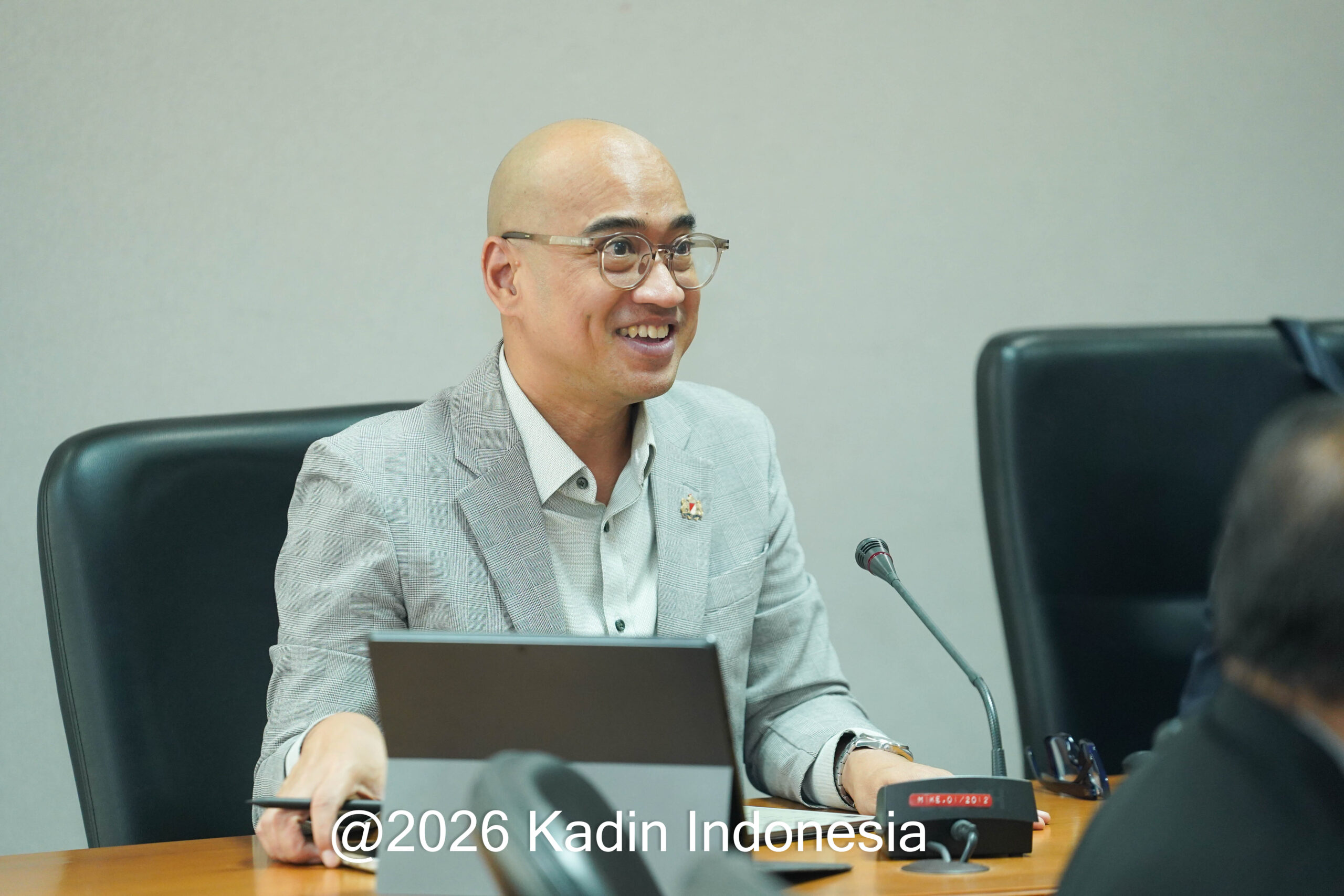
In his opening remarks, Mulya Amri, Executive Director of KII, emphasized that talent competitiveness must be framed as a productivity agenda.
“Indonesia’s challenge is not just producing more graduates. It is producing a workforce that can raise firm-level productivity and enable private sector expansion. Talent reform is fundamentally an economic growth strategy.”
He underlined that this approach is aligned with KADIN’s Rapimnas recommendations, which prioritize productivity enhancement, downstream industrialization, digital transformation, and quality employment as pillars of private sector–led growth.
Global Evidence: Insights from GTCI 2025
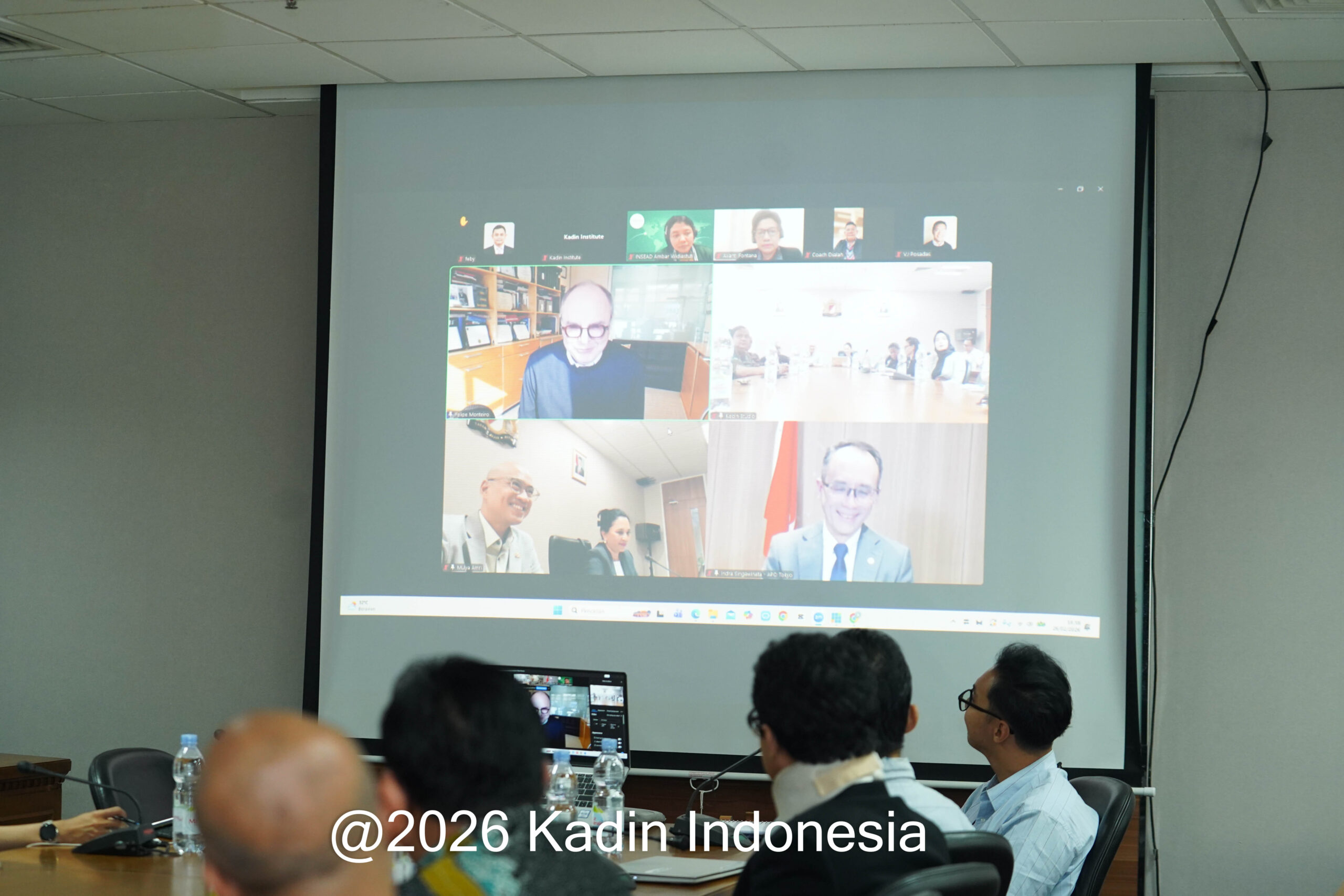
Delivering the keynote presentation, Prof. Felipe Monteiro, Academic Director of the INSEAD Global Talent Competitiveness Index (GTCI), outlined key findings relevant for Indonesia.
The GTCI evaluates 135 economies across 77 indicators, structured around six pillars: Enable, Attract, Grow, Retain, Vocational and Technical Skills, and Global Knowledge Skills. The framework measures not only education attainment, but the full ecosystem that allows countries to develop, deploy, and sustain talent.
Indonesia ranks 80th globally—behind Singapore and Malaysia, and broadly comparable with Viet Nam and the Philippines.
Prof. Monteiro highlighted three strategic message:
- Income level is not destiny.
Institutional quality, regulatory coherence, and strong employer participation often determine whether countries outperform peers at similar income levels. - The school-to-work transition is decisive.
High-performing countries typically feature structured apprenticeships, employer-led vocational governance, and occupational standards co-designed with industry. - Adaptability is the new competitive advantage.
In an era of digital disruption and shifting global value chains, countries must embed lifelong learning and continuous reskilling into their economic model.
He stressed that demographics alone will not secure prosperity:
“Demographics create opportunity, but productivity determines outcomes. Countries that integrate business into talent governance move faster and adjust better.”
For Indonesia, incremental improvements in vocational alignment and firm-level training—if implemented at scale—could generate significant aggregate productivity gains.
The Productivity Warning: APO Perspective
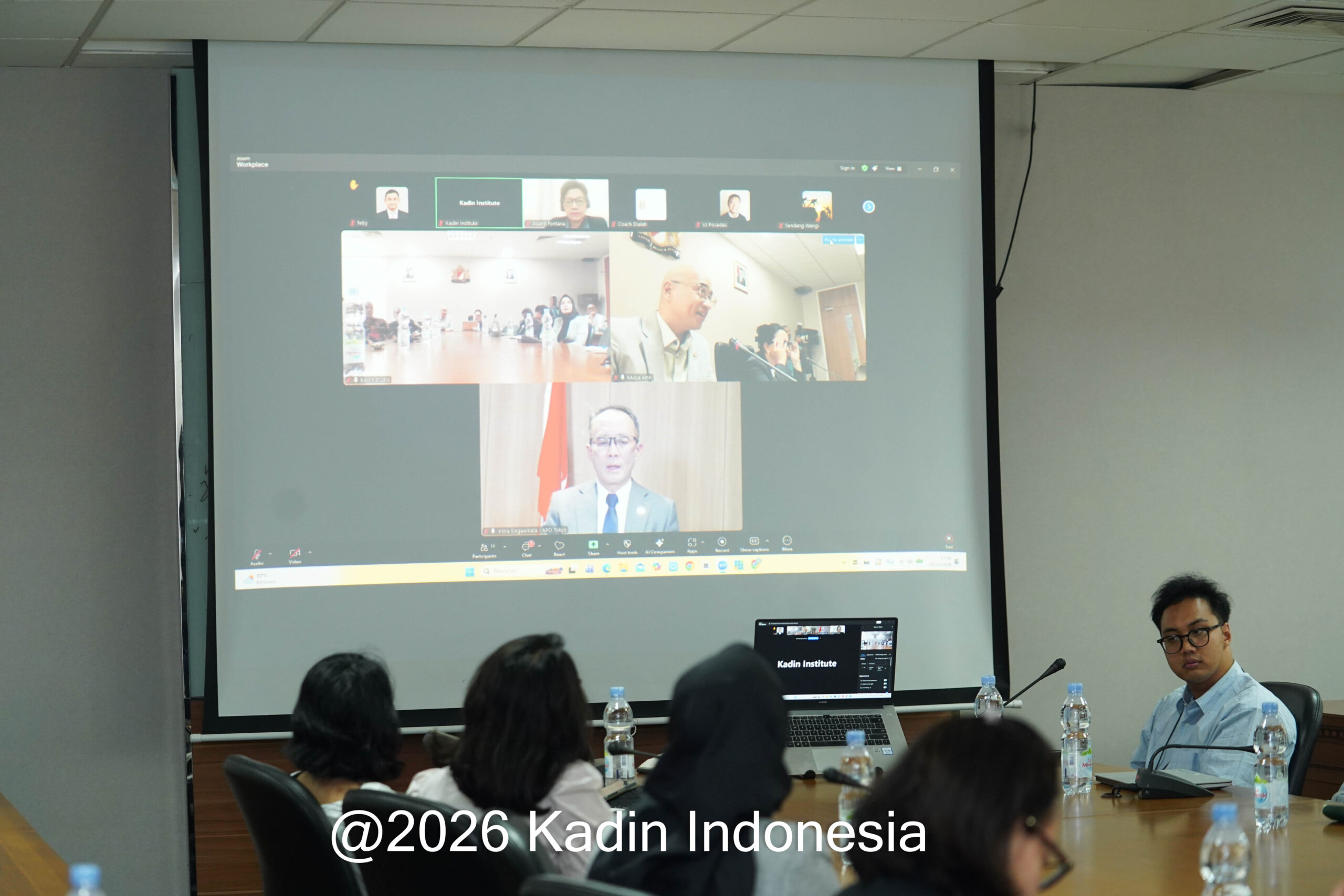
Providing a regional lens, Indra Pradana Singawinata, Secretary-General of the Asia Productivity Organization, presented benchmarking data from the APO Productivity Databook 2025.
Key findings:
- Labor productivity growth (2015–2023 average): 1.8%
- Total Factor Productivity (TFP) growth: –0.1%
- Indonesia is the only major peer with declining TFP
“Without TFP growth, labor productivity gains are capped by demographics. Indonesia must shift from factor accumulation to efficiency and innovation.”
He identified three structural constraints:
- Foundational learning gaps, reflected in Indonesia’s PISA 2022 math score (366).
- TVET relevance gap, with limited structured apprenticeships and outdated equipment.
- Underinvestment in firm-level training, limiting workforce adaptability.
International examples—including levy–grant systems in Singapore and Malaysia and industry-linked TVET reforms in Vietnam—offer reference points, but reforms must be adapted to Indonesia’s institutional context.
Industry Perspective: Skills Beyond Certificates
From the private sector education perspective, Antarina Sulaiman, Vice Chairperson of KADIN Indonesia for Primary and Secondary Education, emphasized that productivity depends not only on technical proficiency, but also on essential competencies.
Drawing on insights from the World Economic Forum and other global surveys, she highlighted increasing employer demand for:
- Critical thinking and problem-solving
- Communication and collaboration
- Adaptability
- Entrepreneurial mindset
- Independent learning capability
Referencing work associated with Harvard University, she underscored the persistent gap between what education systems test and what employers require.
“A diploma does not guarantee competency. Skills must be developed by design.”

From Talent Reform to Productivity Gains
Across the forum, participants agreed that talent reform must translate into measurable firm-level productivity outcomes. Priority directions include:
- Industry-Governed Skills Standards
Establish Sector Skills Councils in priority value chains. - Levy–Grant Training Mechanisms
Introduce co-funding models to incentivize structured firm-level training. - Work-Based Learning Expansion
Make apprenticeship and dual learning models mainstream. - Productivity–Skills Integration
Combine workforce upgrading with lean management, digital adoption, and process innovation. - Outcomes-Based Accountability
Shift metrics from enrollment numbers to job placement, certification quality, and productivity impact.
Conclusion
The KII 8% Club session reaffirmed that talent competitiveness is not an abstract ranking exercise—it is a concrete productivity strategy.
Indonesia’s demographic scale provides potential. However, without reforms in foundational learning, vocational alignment, and firm-level training investment, that potential may not translate into sustained Total Factor Productivity growth.
Industry-led talent development—supported by coordinated public–private execution—remains essential to strengthening Indonesia’s private sector as the primary driver of economic expansion and quality job creation in the decade ahead.